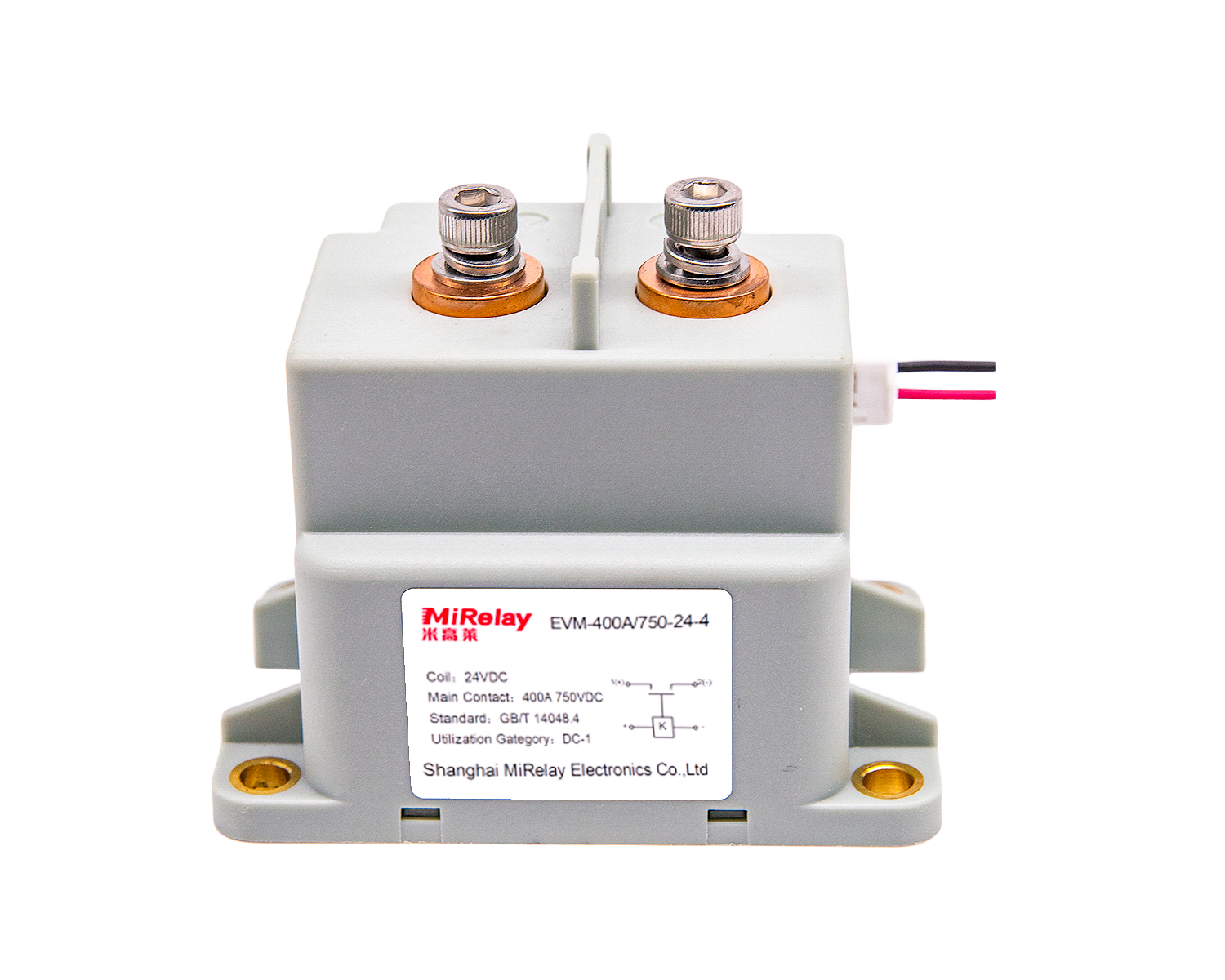
In an energy storage system, the high voltage DC contactor is the component the rest of the safety architecture depends on: it carries the charge and discharge current all day, and it is the part that has to open when something goes wrong. Four properties determine whether it is up to the job.
What makes a good ESS contactor
Arc interruption at 1500 V DC. The contactor uses magnetic blowout arc extinguishing and gas sealing to break DC faults reliably at up to 1500 V, suppressing the arc that a DC circuit will otherwise sustain indefinitely.
Contact resistance below 0.2 mΩ. On-state losses scale with resistance, and at hundreds of amps even small values waste real energy and heat. Premium contact materials and an optimized structure keep SHR’s contactors below 0.2 mΩ.
Operation in under 30 ms. The contactor coordinates with the BMS for millisecond-level fault isolation, which is what keeps a cell-level fault from becoming a rack-level event.
Life by the millions. Mechanical life reaches millions of cycles and electrical life exceeds 100,000 full-load operations, covering the switching schedule of a system designed to run for decades.
Where they sit in the system
Battery cluster isolation. Large-scale storage plants use the contactors for cluster switching control, fault isolation, and maintenance isolation between battery racks.
PCS DC-side protection. On the DC side of the power conversion system, the contactor works with fuses to form the overcurrent protection circuit, keeping a short circuit from propagating beyond the faulted branch.
Pre-charge circuits. Paired with pre-charge resistors, the contactor soft-starts the capacitor bank, avoiding the inrush that would otherwise stress batteries and capacitors on every closing operation.
Containerized storage. The compact form factor fits the space constraints of a container, with IP65 protection for outdoor and harsh-environment sites.
Choosing a model
Sizing runs from system power and voltage: rate the contactor 1.5–2× the system voltage, check continuous and short-time overload current, and derate for the container’s summer interior temperature. For model-level guidance by system size, see the selection guide for energy storage systems, and for how these components behave in real installations, the technical application guide covers the design details. Model pages: EVI series and EVM series.
For project-specific sizing, contact [email protected] with the system voltage, power, and duty cycle, and the engineering team will recommend a configuration.