Why DC interruption is the harder problem
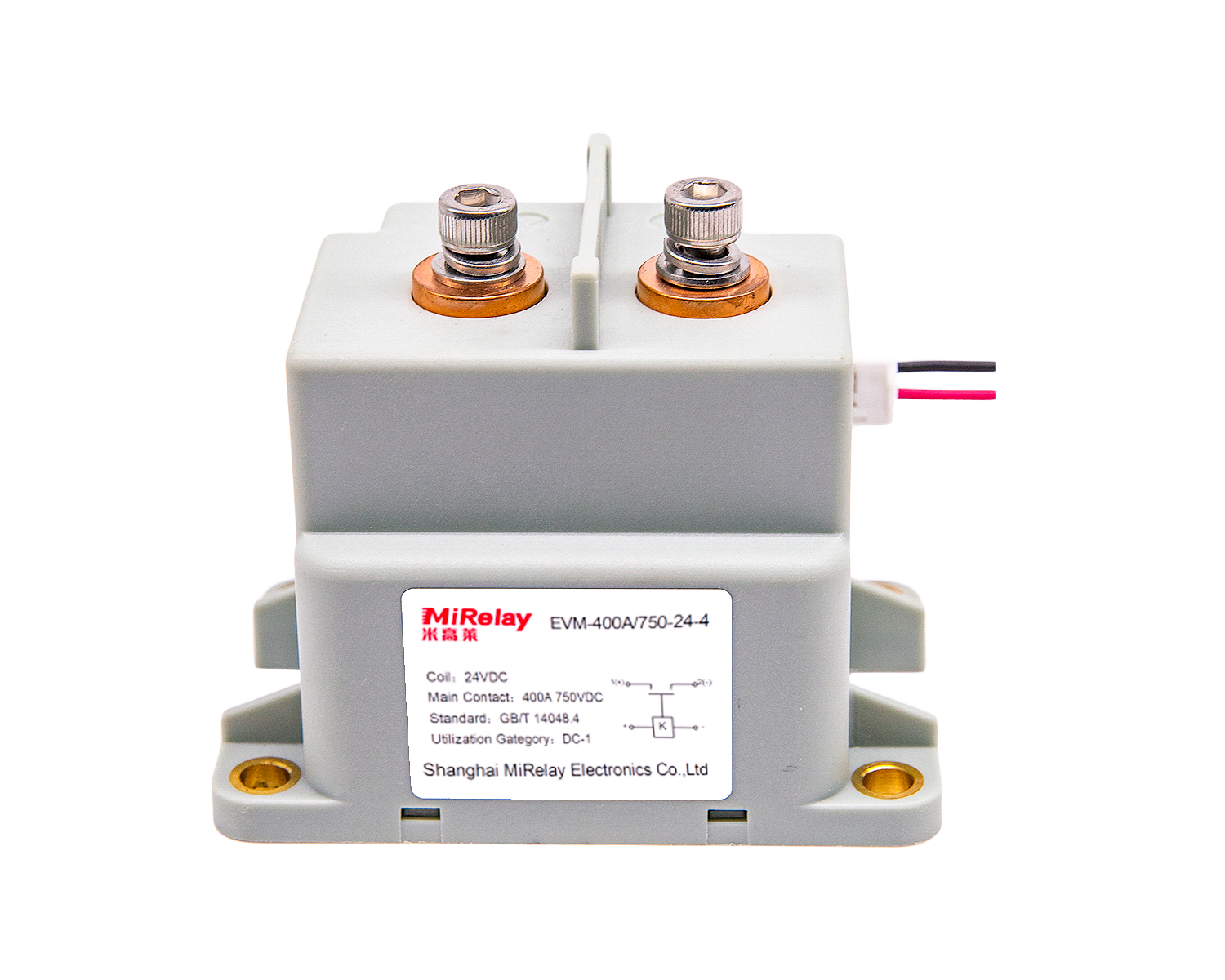
Most of the new-energy chain runs on DC: batteries store it, photovoltaic panels generate it, fuel cells produce it and charging infrastructure moves it. Breaking a loaded DC circuit is more difficult than breaking the same AC circuit because AC crosses zero every half-cycle and gives an arc a natural moment to die; a DC arc has no such pause and will keep conducting until something actively puts it out. SHR AUTOSENSOR’s high-voltage DC relay line was developed around that problem for automotive, solar, wind, charging, energy-storage and industrial circuits.
Construction: epoxy-sealed and ceramic-sealed families
The HVDC line is offered in epoxy-resin and ceramic-sealed bodies, and both use the same arc-management approach:
- The contact chamber is filled with a hydrogen-based mixed gas. The reducing atmosphere keeps contact surfaces clean and limits oxidation across service life.
- Permanent magnets provide magnetic blow-out: the field stretches, cools and extinguishes the arc as the contacts part.
- Together these let the relay interrupt load voltage up to 1000 VDC within a comparatively small contact gap.
What the design buys
- A narrow contact gap, because the arc is quenched magnetically rather than left to stretch itself out — which keeps the body compact
- Low operating noise, relevant in passenger cabins and indoor equipment
- The arc is contained and extinguished inside the sealed chamber rather than vented
- Sealed contacts are isolated from moisture, dust and corrosive atmospheres, so on-resistance does not drift with the surrounding air
- High-temperature materials and a ruggedized, arc-contained construction
- Ingress protection to IP67 and above on sealed versions
Where the parts are used
Across the new-energy sector the relays handle power protection, automation, remote switching, measurement and isolation. The recurring applications break down as follows.
Electric and hybrid vehicles
In an EV or hybrid the HVDC contactor sits in the battery charge and discharge path. It opens on a fault, short or thermal event to isolate the pack before the failure propagates, and it switches high-power auxiliaries — air conditioning, electric power steering, brake systems, pumps and the drive motor. A fast, contained isolation event limits both the repair scope and the energy released into the fault.
Charging infrastructure
In a charging pile the contactor works with the charge controller to connect and break the feed under metered charging, and to open on overcharge, shock or leakage conditions arising from misuse or a downstream fault.
Photovoltaic generation
PV strings use the relays in monitoring and isolation circuits so that an aged, damaged or shorted panel can be disconnected instead of dragging down the output of its whole string. Remote switching lets maintenance isolate a section without exposing staff to live DC, and contains the failure to the affected panel.
Battery energy storage
In BESS racks the contactors switch between subsystems, sit in leakage-detection loops, shield banks from surge and implement over-charge and over-discharge disconnection.
Selection notes
DC contactor selection is largely a question of arc energy. On opening under voltage and load, the inductive and capacitive energy stored in the circuit tries to maintain the arc; if it restrikes or escapes the chamber the downstream electronics take the energy. The hydrogen fill keeps contact condition stable with age, while the magnetic field elongates and cools the arc until it goes out inside the sealed body. In practice, work through four points in order: maximum continuous load voltage and current; the worst-case fault the contactor must interrupt; the ingress protection the mounting environment demands; and coil drive plus mechanical package. Footprint and acoustic noise follow from the sealed construction rather than being separate design targets.
About SHR AUTOSENSOR
SHR AUTOSENSOR TECH LIMITED (SHR AUTOSENSOR) manufactures high-voltage reed relays, mercury wetted relays and high-voltage DC contactors. Contact: [email protected] | +86 13761571029 | www.reed-relay.com